Why Woven Bag Prices Move — and How Buyers Can Plan Around It
Woven bag prices rarely stay flat for a year. A quote you receive in March is often a different number in September, even when your bag specification never changes. That drift is normal, and it is almost never a supplier being opportunistic.
This guide breaks down what actually moves the number — resin, fabric weight, lamination, printing, and freight — and what a buyer can do to keep cost predictable without switching suppliers every quarter.
Why Woven Bag Prices Change So Often
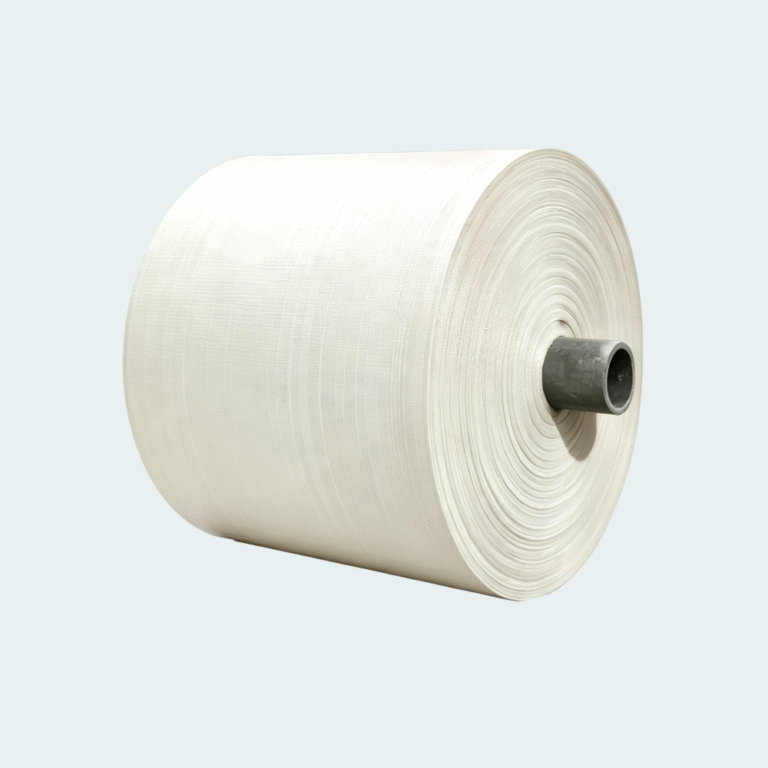
A woven sack is a simple product made from a volatile raw material. The fabric is woven from PP tape, the tape is extruded from polypropylene resin, and resin is priced on a global commodity market that reacts to oil, propylene supply, and demand from every other industry using the same polymer.
On top of that sit freight, energy, and labour, each moving on its own cycle. When all four move the same way, quotes can shift inside a few weeks.
So the useful question is not “why did the price change” but “which part of the price changed”, because each part can be managed differently.
The Four Cost Inputs Behind Every Quote
1. PP resin
Resin is usually the largest single line in the cost of a plain sack — often half to two-thirds of it for unlaminated bags. A 10% move in resin shows up in your unit price within one or two quote cycles.
Grade matters too. Virgin food-contact resin costs more than standard grade, while recycled or off-spec material costs less but changes strength, colour consistency, and printability.
2. Fabric weight (GSM)
GSM sets both cost and performance more directly than any other spec. Dropping from 90 to 80 GSM removes roughly 11% of the polymer in the bag, and the quotation usually follows.
That is why a lower quote is often not a cheaper supplier but a lighter bag. Our guide to how GSM affects woven bag performance explains how to check whether a lighter spec still carries your load.
3. Lamination, printing, and finishing
Every added layer costs material and machine time:
- Lamination. PE coating on one or both sides, or BOPP film, adds material plus a separate production pass.
- Printing. Flexo printing is priced by colour count, and each colour adds a plate or cylinder. BOPP gravure gives a sharper result at a higher setup cost.
- Finishing. Valve sleeves, inner liners, handles, gussets, and perforations each add a step on the line.
4. Labour, energy, and machine time
Weaving runs continuously, so anything that stops a loom costs money. Factories with stable uptime spread fixed cost across more bags; factories that stop for power cuts or repairs pass that cost back into the price.
Freight and Container Economics
Bags are light for their volume, so ocean freight is charged on space rather than weight. A 40ft container fills long before it reaches its weight limit.
Two things follow. Better packing efficiency — flattened and compressed bales, or nested bundles — lowers cost per bag even when the unit price does not move. And when freight rates spike, the landed cost of a light cargo rises faster than the price of the goods themselves.
It is also why FOB and CIF quotes for the same bag can sit far apart in a volatile freight market.
Why Two Suppliers Quote Different Woven Bag Prices
Two factories can quote 15% apart on an identical drawing and both be honest. The gap usually sits in one of these places:
- Material grade. Different resin grades, or a different share of recycled content.
- Fabric reality. A nominal 90 GSM bag can be woven lighter within tolerance.
- Machine base. Modern wide looms produce the same tonnage on fewer machines, which lowers conversion cost.
- Overheads. A trading company adds a layer that a factory does not.
- Order size. Small runs carry setup cost per bag; large runs amortise it.
None of that is visible on a price list, which is why sample testing and a factory audit tell you more than a spreadsheet comparison.
How Buyers Can Plan Around Price Moves
Most of the volatility in woven bag prices cannot be removed, but it can be shared in a way that suits both sides.
Lock volume, not price
A supplier cannot fix a price for twelve months without building in a risk premium. You usually pay less overall by committing to volume with a periodic price review than by demanding a fixed number.
Agree a resin-linked formula
For repeat business, “resin index plus a fixed conversion fee” keeps the conversation honest. When resin falls, your price falls with it, and nobody has to renegotiate from scratch.
Optimise the spec, not just the supplier
Most savings sit in the bag itself: matching GSM to the real load, choosing single-side coating where two sides are not needed, and cutting colour count without losing shelf impact. Reviewed once, those changes hold for years.
Order in the right window
Chinese New Year, National Day, and peak export seasons tighten capacity. Placing volume orders three to four months before you need them usually beats chasing quotes in a busy month.
What Weavota Does Differently
Weavota weaves its own fabric and makes its own bags in one plant, so a quotation reflects resin, weaving, lamination, and printing with no trading layer in between. We also quote in the structure above, so you can see which input changed when a number moves.
- Fabric from 55 to 150 GSM on Starlinger and W&H looms
- Lamination, BOPP, valve, liner, and handle options under one roof
- Quotations issued with a stated resin basis
- ISO 9001 certified production with in-house lab testing
- Samples in 5 to 7 days, bulk in 15 to 25 days
If you want to sanity-check a quote you already hold, send us the spec — GSM, size, lamination, print colours, and order quantity — and we will tell you where the number sits and why.
Need a Price on a Specific Woven Bag?
Send the specification and we will come back with a costed offer instead of a range.
Request a quote →
This article is part of our Industry Insights series. For more on specifications and sourcing, browse our other industry insights.